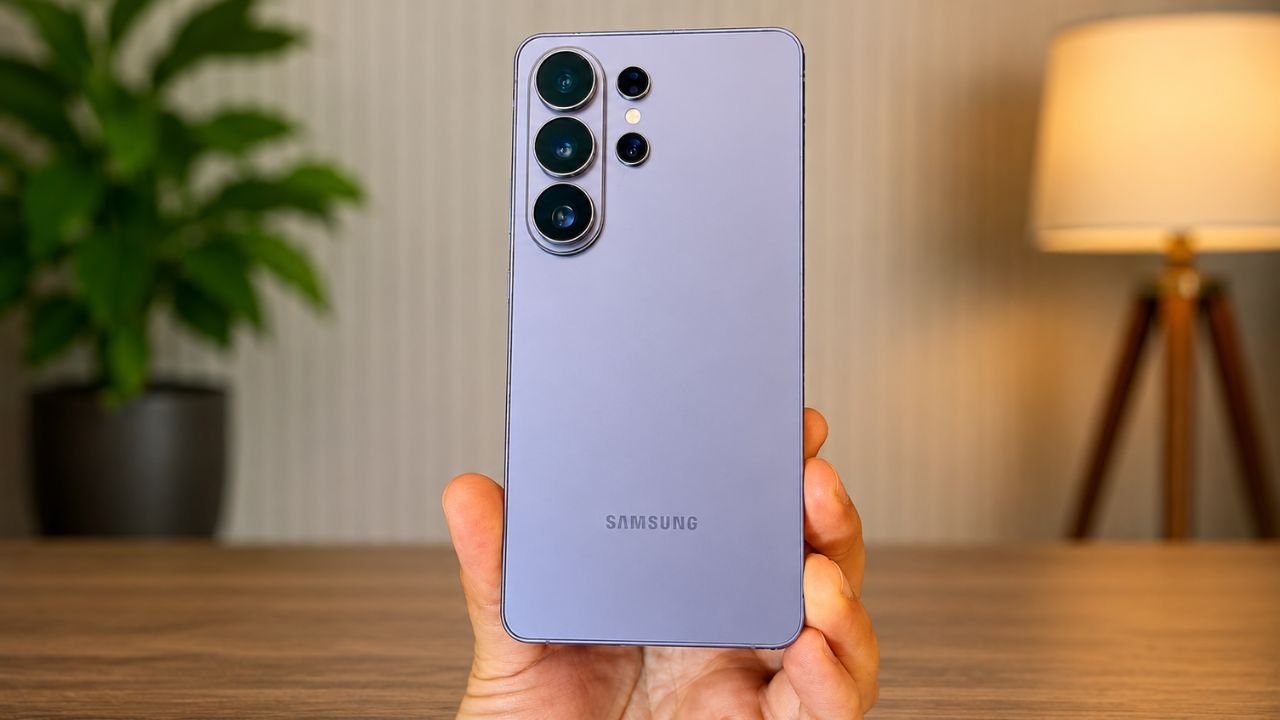
Fresh leaks suggest that Samsung has officially commenced work on its next flagship smartphone, with initial design renders revealing a significant visual overhaul. Following the global rollout of the Samsung Galaxy S26 Ultra earlier this year, leaked computer-aided design renders indicate that the upcoming Samsung Galaxy S27 Ultra will abandon the familiar pill-shaped camera housing in favor of a redesigned horizontal rear camera module. Rendered images shared by industry sources point toward substantial changes in aesthetic direction, button placement, and rear sensor configuration for the South Korean tech giant’s next flagship device.
Redesigned Camera Module
The leaked CAD renders, published by Android Headlines in collaboration with noted tipster Steve H.McFly, known online as OnLeaks, provide an early glimpse into the proposed design of the upcoming flagship. The most striking change occurs on the back panel, where Samsung appears to be ditching its long-standing pill-shaped camera deco.
In its place, the renders reveal a prominent, horizontally aligned rectangular camera island. This design shift represents a bold departure from previous generations, offering a completely distinct profile while housing the primary camera hardware across the top section of the rear chassis.
Triple Camera Array
Pictured in a sleek grey colourway, the CAD renders indicate a potential shift in rear camera setup. Rather than retaining the quad-camera layout seen on the Samsung Galaxy S26 Ultra, the renders highlight a streamlined triple rear camera system paired with an LED flash inside the rectangular camera module.
The rear surface maintains a completely flat glass panel, accented by minimal aesthetic detailing. Centered near the bottom of the back cover, the traditional Samsung branding remains clean and understated, emphasizing a minimalist aesthetic for the next-generation premium device.
Chassis and Display
Along the outer edges, the early Samsung Galaxy S27 Ultra leak demonstrates a refined flat mid-frame architecture. Physical control placement remains ergonomic, with both the primary power button and the volume rocker situated on the right spine, leaving the left side entirely clear of buttons except for subtle antenna bands integrated into the metal frame.
The front facade showcases a completely flat display featuring uniform bezels. A centered hole-punch cutout is positioned at the top of the panel to accommodate the front-facing selfie camera and facilitate video calling functionality.
Port Layout Details
The bottom edge of the device retains its functional hardware arrangement while adopting modern connectivity standards. A centered USB Type-C port is flanked by the primary microphone cutout and the main loudspeaker grille along the lower edge of the frame.
Crucially for productivity enthusiasts, the integrated S-Pen stylus remains a core element of the Ultra experience. The dedicated S-Pen silo is located at the bottom-left corner of the frame, mirroring the placement found on current generation models.
Design Feature Comparison
| Hardware Feature | Samsung Galaxy S26 Ultra | Samsung Galaxy S27 Ultra (Leaked Renders) |
|---|---|---|
| Camera Layout | Pill-shaped vertical camera deco | Horizontal rectangular camera island |
| Rear Sensors | Quad rear camera setup | Triple rear camera setup with LED flash |
| Rear Panel | Flat glass back | Flat glass back with centered bottom branding |
| Frame & Controls | Flat mid-frame, right-side controls | Flat mid-frame, right-side controls, clean left spine |
| Stylus Housing | Bottom-left S-Pen slot | Bottom-left S-Pen slot |
Key Design Highlights
The leak highlights several notable physical modifications across the chassis: horizontal rectangular camera island replacing the vertical deco, triple rear camera array paired with an LED flash, flat mid-frame design with multiple antenna band cutouts, centered hole-punch display for front camera integration, and bottom-left S-Pen slot retaining traditional stylus access.
Final Thoughts
The leaked CAD renders of the Samsung Galaxy S27 Ultra mark an intriguing pivot in Samsung’s design philosophy for its top-tier flagships. Moving away from incremental year-over-year updates, a transition to a horizontal rectangular camera module signals a clear effort to establish a distinct visual identity in an increasingly competitive smartphone market. While these early CAD models reveal compelling structural shifts, additional hardware specifications, internal camera sensor details, and processor capabilities will undoubtedly surface as development progresses in the coming months.